


Close Menu
Advanced Maritime Technology International
  • News
    • A-M
      • Battery Technology
      • Environmental
      • Equipment and Services
      • Expo
      • Ferries and Cruises
      • Marine Construction
      • Marine Renewables
    • N-Z
      • Naval Projects
      • Onboard Systems
      • Ports and Harbours
      • Power and Propulsion
      • Shipyards and Shipbuilding
      • Vessel Build and Maintenance
  • Features
  • Online Magazines
  • Opinion
  • Videos
  • Supplier Spotlight
LinkedIn Facebook X (Twitter)
  • Sign-up for Free Weekly E-Newsletter
  • Meet the Editors
  • Contact Us
  • Media Pack
LinkedIn
Subscribe
Advanced Maritime Technology International
  • News
      • Alternative Fuels
      • Autonomous Technology
      • Awards
      • Battery Technology
      • Expo
      • Ferries and Cruises
      • Hydrogen
      • Legislation
      • Motor Technologies
      • New Vessels
      • Onboard Systems
      • Ports and Harbours
      • Power and Propulsion
      • Shipyards and Shipbuilding
      • Vessel Design
  • Features
  • Online Magazines
    1. January 2026
    2. September 2025
    3. April/May 2025
    4. January 2025
    5. September 2024
    6. April 2024
    7. Archive Issues
    8. Subscribe Free!
    Featured
    December 4, 2025

    In this issue – January 2026

    Online Magazines By Web Team
    Recent

    In this issue – January 2026

    December 4, 2025

    In this issue – September 2025

    August 6, 2025

    In this issue – April/May 2025

    May 14, 2025
  • Subscribe
  • Opinion
  • Videos
  • Awards
    • Electric & Hybrid Marine Awards 2025 – Nominations open
    • 2024 Winners
    • 2023 Winners
    • 2022 Winners
    • Previous Winners
  • Supplier Spotlight
  • Expo
LinkedIn Facebook
Subscribe
Advanced Maritime Technology International
Features

From the magazine: Strait line speed

Matt RossBy Matt RossAugust 15, 20253 Mins Read
Candela demonstrates the potential of hydrofoiling across the Strait of Gibraltar
Share
LinkedIn Twitter Facebook Email

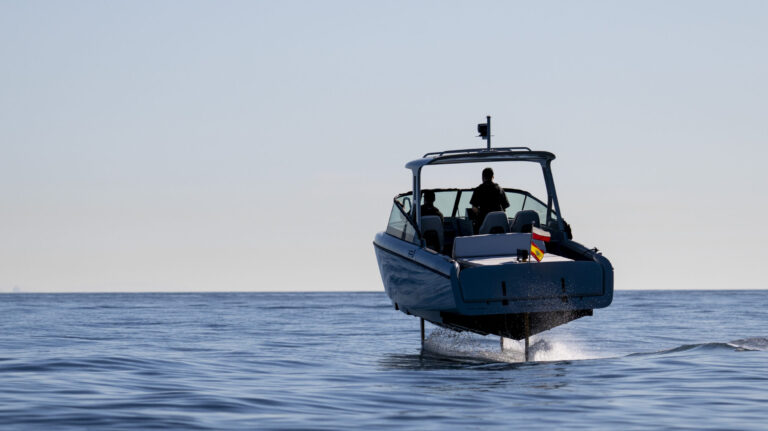
Back in May, a Swedish crew successfully piloted a Candela C-8 foiling electric boat from Europe to North Africa – a feat that the Candela team says marks the first-ever intercontinental journey by an electric vessel. The vessel, a Candela C-8 Polestar Edition, completed the voyage from Sotogrande in Spain to Ceuta in North Africa (a distance of 24 nautical miles) in just over one hour – comparable to a conventional fast ferry. After recharging, the vessel returned to the Spanish mainland the same day.

Candela’s now recognizable twin hydrofoils lift the C-8 above the water, reducing drag and cutting energy consumption by 80% over conventional fast vessels. This enables the long electric range needed to cross the Strait of Gibraltar. The record-setting voyage was undertaken to demonstrate the potential of Candela’s new P-12 electric hydrofoil ferry – a vessel design that the Candela team believes can deliver clean, cost-efficient transportation along the Spanish coast and across the Strait. The majority of trips along this vital corridor are conducted by large, diesel-powered car ferries that primarily serve major hubs. Candela aims to complement these services by introducing fast, sustainable direct routes that expand access for underserved coastal communities.
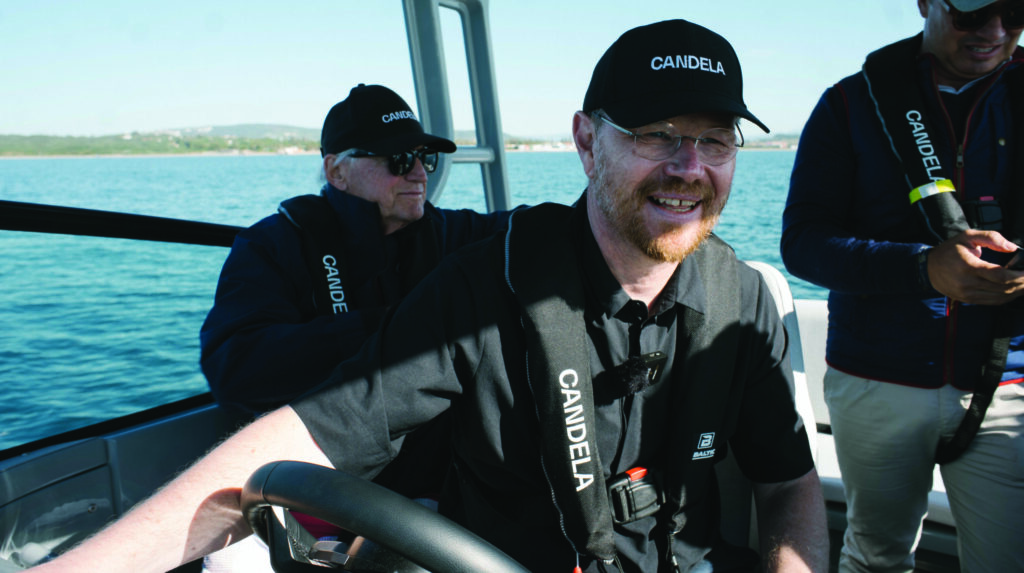
“There’s a clear need for additional fast, clean and efficient travel options across the Mediterranean – and for direct lines that wouldn’t be economically viable with larger, conventional vessels,” said Gustav Hasselskog, CEO of Candela and pilot during the May crossing. “We can help meet this demand, working alongside existing operators and ferries to boost connectivity and cut emissions – not just across the Strait but also along the coast, for example connecting cities along the Costa del Sol.”

The Gibraltar Strait is known for strong currents and unpredictable seas, making conditions challenging for smaller vessels. This made it an ideal test for Candela’s computer-controlled hydrofoil system, which uses sensors to detect waves, wind and current, with the system automatically adjusting the hydrofoils up to 100 times per second.

“It functions much like the flight controller of a modern jet fighter, and works very well,” added Hasselskog. “We couldn’t feel the waves, even though the camera boat was bouncing around quite a bit.”

During the voyage, the Candela C-8 used just 40kWh of energy – about €8 (US$9) worth. By comparison, the similarly sized gasoline-powered camera boat burned 50 liters of fuel, costing around €90 (US$106).


This article was originally published in the September 2025 issue of Electric and Hybrid Marine Technology. To view the magazine in full, click here. 

Share. Twitter LinkedIn Facebook Email
Previous ArticleFirst fully solar-charged e-JET tender launched by Sunpower
Next Article Electric & Hybrid Marine Expo North America opens this week!

Related Posts

Features

CASE STUDY: Stena Futuro

July 7, 20253 Mins Read
Features

EXCLUSIVE FEATURE: How are hydrogen fuel cells revolutionizing the industry?

May 26, 20259 Mins Read
Features

EXCLUSIVE INTERVIEW: René Hansen, CEO of X Shore

February 10, 20259 Mins Read
Latest News

OPINION: The shipboard hazard of small lithium-ion batteries

March 12, 2026

New project aims to accelerate safe adoption of autonomous shipping

March 12, 2026

Australia awards A$176m contract to expand Bluebottle uncrewed surface vessel fleet

March 12, 2026

Receive breaking stories and features in your inbox each week, for free


Enter your email address:


Supplier Spotlights
  • Transfluid
Getting in Touch
  • Contact Us / Advertise
  • Meet the Editors
  • Media Pack
  • Free Weekly E-Newsletter
Our Social Channels
  • LinkedIn
UKi Media & Events
© 2026 UKi Media & Events a division of UKIP Media & Events Ltd
  • Terms and Conditions
  • Privacy Policy
  • Cookie Policy
  • Notice & Takedown Policy

Type above and press Enter to search. Press Esc to cancel.