


Close Menu
Advanced Maritime Technology International
  • News
    • A-M
      • Battery Technology
      • Environmental
      • Equipment and Services
      • Expo
      • Ferries and Cruises
      • Marine Construction
      • Marine Renewables
    • N-Z
      • Naval Projects
      • Onboard Systems
      • Ports and Harbours
      • Power and Propulsion
      • Shipyards and Shipbuilding
      • Vessel Build and Maintenance
  • Features
  • Online Magazines
  • Opinion
  • Videos
  • Supplier Spotlight
LinkedIn Facebook X (Twitter)
  • Sign-up for Free Weekly E-Newsletter
  • Meet the Editors
  • Contact Us
  • Media Pack
LinkedIn
Subscribe
Advanced Maritime Technology International
  • News
      • Alternative Fuels
      • Autonomous Technology
      • Awards
      • Battery Technology
      • Expo
      • Ferries and Cruises
      • Hydrogen
      • Legislation
      • Motor Technologies
      • New Vessels
      • Onboard Systems
      • Ports and Harbours
      • Power and Propulsion
      • Shipyards and Shipbuilding
      • Vessel Design
  • Features
  • Online Magazines
    1. January 2026
    2. September 2025
    3. April/May 2025
    4. January 2025
    5. September 2024
    6. April 2024
    7. Archive Issues
    8. Subscribe Free!
    Featured
    December 4, 2025

    In this issue – January 2026

    Online Magazines By Web Team
    Recent

    In this issue – January 2026

    December 4, 2025

    In this issue – September 2025

    August 6, 2025

    In this issue – April/May 2025

    May 14, 2025
  • Subscribe
  • Opinion
  • Videos
  • Awards
    • Electric & Hybrid Marine Awards 2025 – Nominations open
    • 2024 Winners
    • 2023 Winners
    • 2022 Winners
    • Previous Winners
  • Supplier Spotlight
  • Expo
LinkedIn Facebook
Subscribe
Advanced Maritime Technology International
Ferries and Cruises

University joins Wightlink zero-emission FastCat feasibility project

Alex PackBy Alex PackJanuary 26, 20262 Mins Read
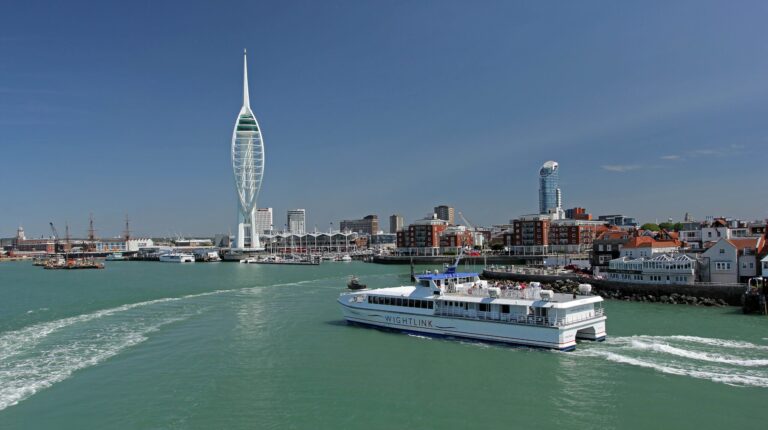
University joins Wightlink zero-emission FastCat feasibility project.
Share
LinkedIn Twitter Facebook Email

Southampton Solent University has joined a project funded by the UK government and led by Wightlink to assess how zero-emission operations could be introduced on the operator’s high-speed FastCat ferry service.

The seven-month feasibility study has secured funding from the government’s Clean Maritime Demonstration Competition (CMDC6) and will explore how renewable shore power could replace diesel while FastCat vessels on the Portsmouth–Ryde route are docked.

The project will examine how renewable energy generation and energy storage systems could supply onboard power when vessels are alongside, eliminating the need to run diesel engines in port. According to the project partners, the approach could reduce greenhouse gas emissions, improve local air quality and provide a model for cleaner short sea ferry operations.

The study will model vessel energy requirements, assess renewable infrastructure options and develop a regulator-informed roadmap toward future zero-emission operations. Infrastructure readiness at Gunwharf Quays and Ryde Pier will also be evaluated.

“Using our state-of-the-art full mission bridge and engine room simulators, we will model vessel operations, emissions and shore-side energy integration under real-world conditions,” said Capt. Zakirul Bhuiyan, associate professor of maritime simulation and autonomy at Southampton Solent University. “This feasibility study will validate renewable solutions to replace in-port diesel use, supporting technical readiness and accelerating the wider transition to zero-emission ferry operations.”

The project is being delivered by a consortium led by Wightlink and M3MAS Limited, with support from Ameresco, Southampton Solent University and Supply Chain Analysis. It will assess power supply options including grid connections, solar generation and battery storage, alongside cost projections and emissions impact analysis.

Wightlink said eliminating diesel use while vessels are alongside could have a measurable environmental impact. “By eliminating diesel use while our FastCat vessels are alongside, we can significantly improve air quality in Portsmouth and Ryde and reduce greenhouse gas emissions,” said Charles Field, head of engineering and estates at Wightlink.

If implemented, the shore power solution could save an estimated 96 metric tons of CO2e per year, equivalent to removing more than 40 passenger cars from the road. The project partners say the modular approach could be replicated across more than 80 short sea ferry routes in the UK and support compliance with future emissions regulations, including the EU’s FuelEU Maritime framework.

In related news, Royal Bodewes to build zero-emission electric cargo vessel for K Sætre Rederi

Share. Twitter LinkedIn Facebook Email
Previous ArticleStena Connecta arrives in Belfast ahead of hybrid electric service launch
Next Article Stena RoRo orders next-generation C-Flexer ro-ro vessels

Related Posts

Battery Technology

AYK Energy to supply battery system for Germany’s next Polarstern research vessel

March 4, 20262 Mins Read
Alternative Fuels

Wärtsilä Gas Solutions secures LNG systems order for two bunkering vessels

February 24, 20262 Mins Read
Ferries and Cruises

Glosten to design hybrid-electric ferry for southeast Alaska ports

February 20, 20261 Min Read
Latest News

OPINION: The shipboard hazard of small lithium-ion batteries

March 12, 2026

New project aims to accelerate safe adoption of autonomous shipping

March 12, 2026

Australia awards A$176m contract to expand Bluebottle uncrewed surface vessel fleet

March 12, 2026

Receive breaking stories and features in your inbox each week, for free


Enter your email address:


Supplier Spotlights
  • Bosch Engineering GmbH
Getting in Touch
  • Contact Us / Advertise
  • Meet the Editors
  • Media Pack
  • Free Weekly E-Newsletter
Our Social Channels
  • LinkedIn
UKi Media & Events
© 2026 UKi Media & Events a division of UKIP Media & Events Ltd
  • Terms and Conditions
  • Privacy Policy
  • Cookie Policy
  • Notice & Takedown Policy

Type above and press Enter to search. Press Esc to cancel.