


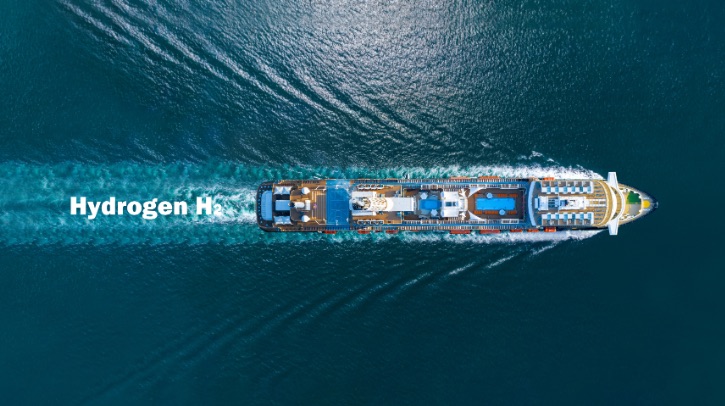
The International Chamber of Shipping (ICS) has launched a report that found that hydrogen-based fuel sources need to scale five times from current levels to keep the net zero by 2050 scenario within reach. It also identified that the heavy industry sector is expected to dominate global hydrogen demand by 2050, with South Korea, Japan and Europe being the first markets for hydrogen.
The International Chamber of Shipping’s hydrogen findings
The ICS report Turning hydrogen demand into reality: Which sectors come first? focuses on the potential of clean hydrogen to function as an energy carrier and feedstock to decarbonize multiple sectors, especially hard-to-abate sectors. The report identifies that to meet future hydrogen demand, the scale of renewable electricity demand for green hydrogen production is unprecedented, leading to new opportunities and challenges.
The report, produced in collaboration with Professor Stefan Ulreich, Professor of energy economics at Biberach University of Applied Sciences, and ICS, seeks to better assess the future supply and demand dynamics of the new zero-emission fuels that industrial sectors, including shipping, will use in the coming decades.
Professor Ulreich commented, “Key for the realization of a future hydrogen economy is the infrastructure for production, but also transportation infrastructure. The maritime industry will play a key role by connecting the hydrogen surplus regions with the high-consumption areas. However, this necessitates port infrastructure for loading/unloading and pipeline transportation from the port to the consumers. A coordinated action would help most to deliver this.
“What we are seeing is that the annual hydrogen demand would mean increasing the fleet to transport hydrogen by ship. To just meet a global increase of 30 million tons of hydrogen traded worldwide, we could need up to 411 new hydrogen vessels (for long distances) or up to 500 vessels if transported as ammonia.”
Hydrogen demand variability
Guy Platten, secretary general of the ICS, stated, “For global hydrogen demand to keep the net zero by 2050 scenario within reach, demand for hydrogen-based fuel sources would need to scale five times from current levels to reach approximately 500 million tons from 2030 to 2050. One of the main takeaways of this report is the high variability in potential demand. The industry will dominate the hydrogen demand. However, shipping can play a key role as an enabler to the hydrogen economy.”
The report highlights three economies as the main markets to initially drive hydrogen demand – South Korea, Japan and the EU. Europe has a target of 20 million tons of hydrogen per year by 2030, with half of that volume to come from imported sources. To meet the EU’s expected demand, the fleet will need to increase by up to 300 vessels to meet the 2030 target.
Facilitating future hydrogen
According to the International Energy Agency, hydrogen use is expected to remain static and within current industrial use cases into 2030. However, to go beyond the current hydrogen demand by existing sectors, infrastructure, enabling regulation and power access barriers need to be addressed for new sectors to begin uptake of hydrogen the report finds.
Platten added, “Regulatory certainty is vital, and governments are the key to unlocking the opportunity for early adopters by prioritizing demand incentives over supply support to catalyze offtake agreements. One thing is certain, readiness at ports and infrastructure development to remove barriers to maritime uptake will be crucial. This will allow for both the maritime and other sectors to move forward, adding energy security and enhancing diversification. This is a once-in-a-generation opportunity to transform the whole energy maritime value chain.”
In related news, the International Chamber of Shipping has launched the fifth edition of ‘Shipping and the Environment: A Guide to Environmental Compliance’. Click here to read the full story.