


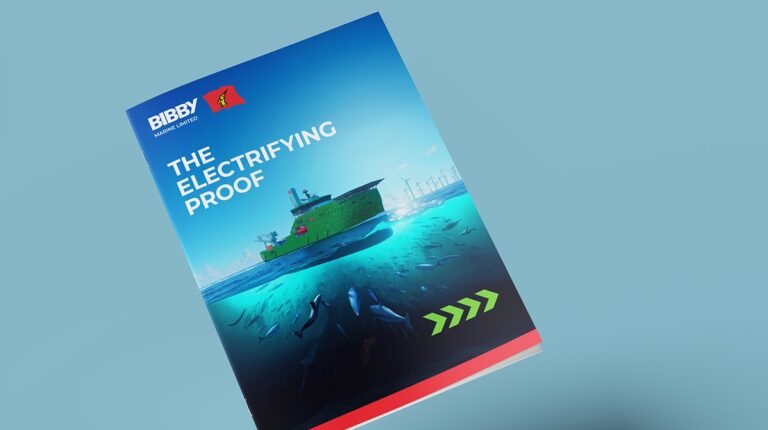
New analysis from Bibby Marine has revealed that electrifying offshore wind commissioning service operation vessels (CSOVs) could reduce operating costs by up to 40% compared with conventionally fueled vessels.
The findings are outlined in the company’s latest white paper, The Electrifying Proof, which examines the commercial case for electrified CSOVs serving offshore wind farms.
According to the analysis, hybrid-electric CSOVs can achieve significant savings through reduced fuel use, lower carbon costs and optimized engine operation. When operating in hybrid mode, the vessels can reduce annual costs by as much as US$1m.
The report states that savings could increase to around 70% if vessels operate in fully electric mode supported by offshore charging infrastructure, representing potential annual savings of approximately US$1.8m.
Hybrid-electric CSOVs use dual-fuel generator sets to charge onboard battery systems that power electric propulsion. When grid charging is unavailable, the generators maintain battery levels while operating at optimized engine loads to improve efficiency.
Bibby Marine said the technology required to electrify the CSOV fleet is already available and becoming more cost-competitive as battery prices decline.
The company also highlighted regulatory drivers influencing vessel electrification. European regulations covering carbon emissions from vessels servicing offshore wind installations are expected to come into effect in 2027. These include policies such as EU Emissions Trading System and FuelEU Maritime.
With around 45GW of offshore wind capacity already installed in the North Sea and plans to expand this to 300GW over the next 25 years, the cost of servicing wind farms is expected to increase unless operators reduce emissions and associated carbon costs.
Bibby Marine said the development of offshore charging infrastructure will be important for enabling fully electric vessel operations. Charging systems could be integrated into wind turbines or installed through monopile or floating connection systems.
Gavin Forward, new build project director at Bibby Marine, said, “The design of our vessel enables clean operations from day one, without reliance on offshore charging infrastructure, while remaining fully future proofed for connection when it becomes available.
“eCSOVs offer a clear route to lower operating costs compared with conventional CSOVs by reducing energy consumption, limiting exposure to rising carbon costs and future proofing operations. A battery-first architecture delivers improved operating performance, redundancy and flexibility over conventional vessel designs (internal combustion engines, for example), while increasing crew comfort and reducing underwater noise emissions. We are proud of our work with experienced technology partners to develop the first eCSOV for the North Sea market and help drive supply chain decarbonization in the sector.”
Bibby Marine is currently building a hybrid-electric CSOV at the Armon shipyard in Vigo, Spain, with commissioning expected in mid-2027. Technology partners on the project include Kongsberg, Corvus Energy and Stillstrom.
Related news, AYK Energy to supply battery system for Germany’s next Polarstern research vessel